Carbon Energy · Research and development

Engineering carbon to power batteries, revive soils and protect our climate.

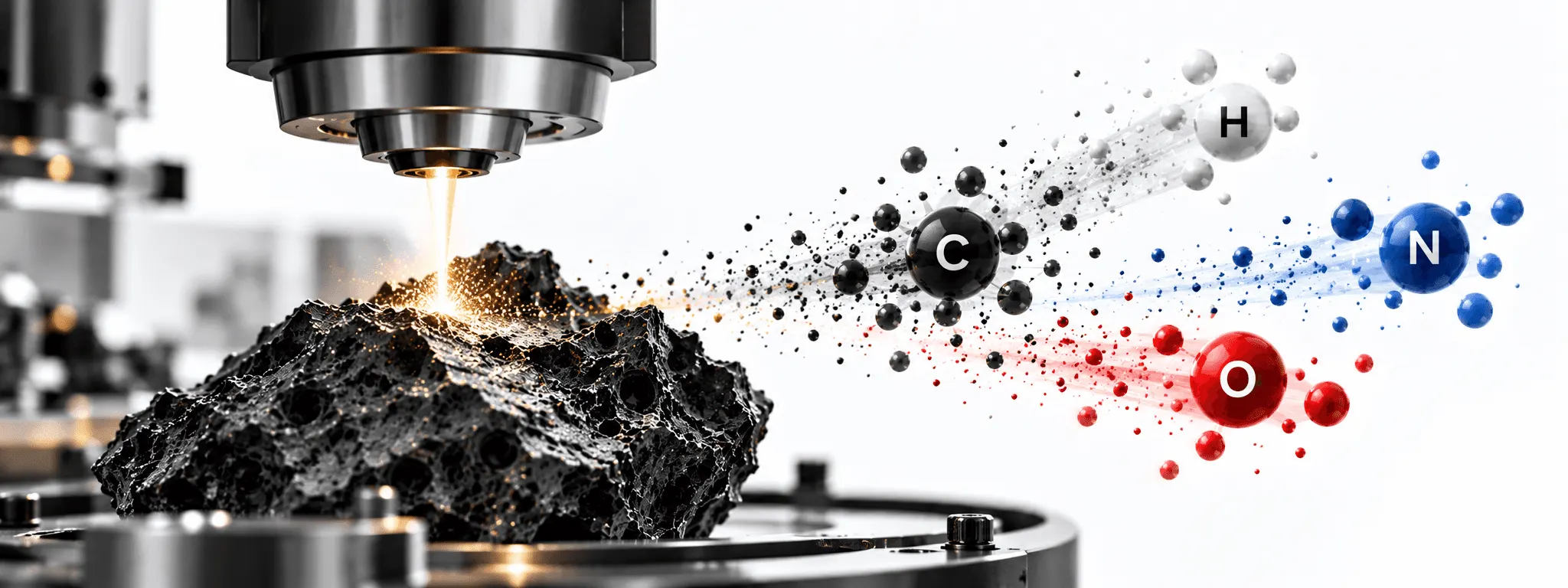
Carbon Energy is the research and development programme of Kari Energy. Our team takes the biochar produced in our own reactors and refines it into advanced carbon energy materials and functionalised biochar, designing each new product so that the carbon inside it delivers the greatest and most lasting benefit for the climate, for industry and for the people who use it.

NNNNNNOHCOOHOOHOHCOOHOONa⁺
Shadow
23955332
programmes

Carbon energy materials and functionalised biochar.

06036832
programmes

Carbon energy materials and functionalised biochar.

75478632
programmes

Carbon energy materials and functionalised biochar.

38005566
materials

Each one is advancing from the laboratory towards pilot production.

47816706
materials

Each one is advancing from the laboratory towards pilot production.

53956106
materials

Each one is advancing from the laboratory towards pilot production.

26984501
feedstock

Every material begins as biochar from our own reactors.

61000831
feedstock

Every material begins as biochar from our own reactors.

45477321
feedstock

Every material begins as biochar from our own reactors.

01 / RESEARCH PROGRAMMES

One carbon. Many possibilities.

One carbon. Many possibilities.

One carbon. Many possibilities.

Carbon is the most versatile element we work with. Arranged one way, it holds sodium ions inside a battery electrode; arranged another, it carries nutrients and microbes into a farmer’s field, captures metals from contaminated water or stays locked in soil for centuries. Our research begins with a single question for every tonne of biochar our reactors produce, which is where that carbon can do the most good for the longest time.

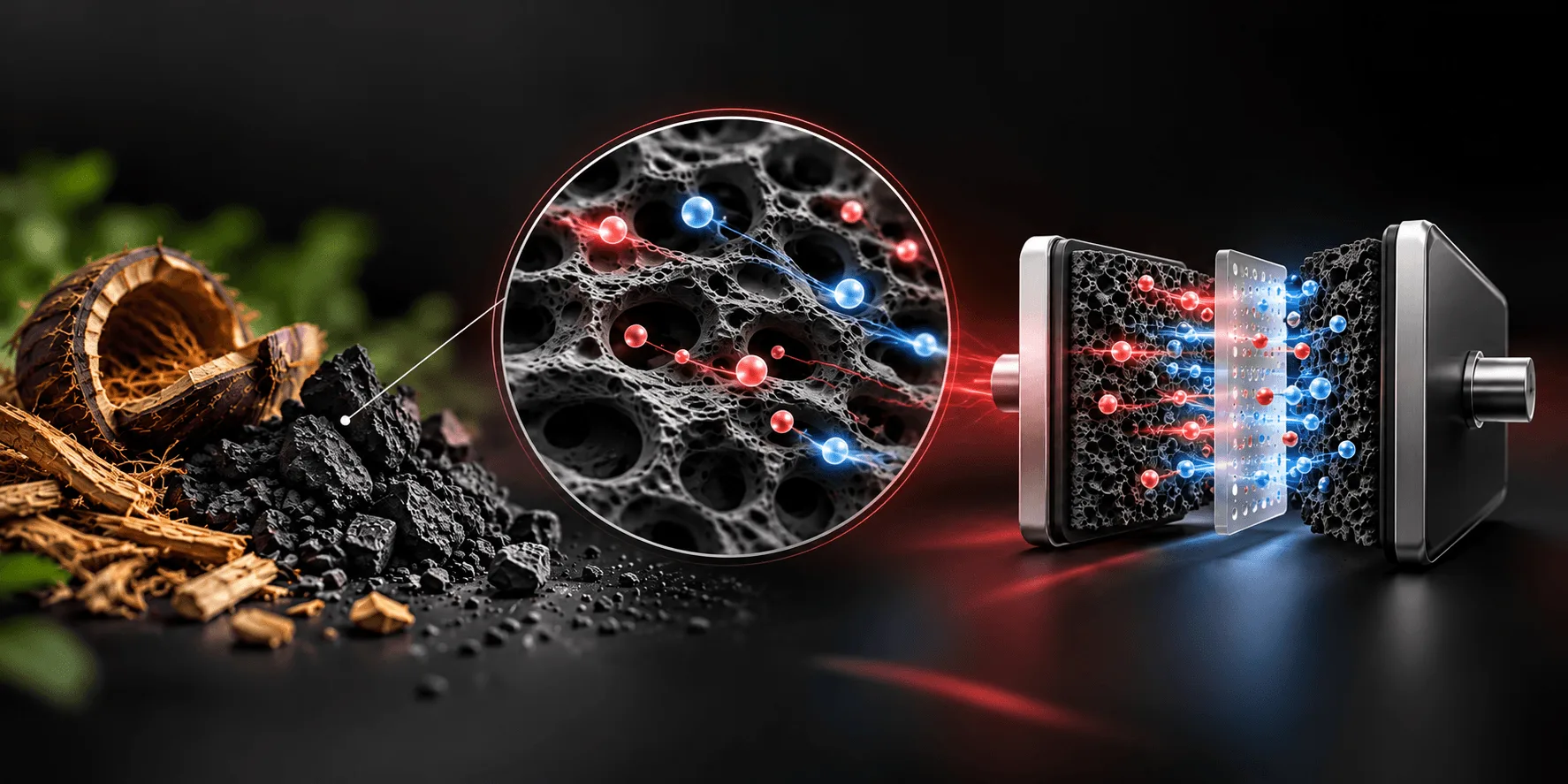
Energy storage depends on carbon, and most of the carbon inside today’s batteries and capacitors comes from fossil sources such as petroleum coke and synthetic graphite. We are developing biomass-derived carbons with controlled porosity, layer spacing and surface chemistry, so that the next generation of energy storage can begin with a renewable feedstock grown in Indian fields.

Hard carbon anodes give sodium-ion batteries an affordable anode built from abundant, renewable material.

High-surface-area carbons store charge in supercapacitors that deliver power in seconds across hundreds of thousands of cycles.

Nitrogen-doped carbons support the catalysts used in fuel cells and in electrolysers that produce green hydrogen.

Conductive carbon additives help electrodes across many battery chemistries carry current efficiently.

Advanced carbon energy materials

CIRCULAR CARBON / KARI ENERGY

Advanced carbon energy materials

02 / MATERIAL DESIGN

Temperature decides what the carbon becomes.

Temperature decides what the carbon becomes.

Temperature decides what the carbon becomes.

Processing temperature is one of the strongest levers in carbon design. Move the slider to see how yield, stability, porosity, conductivity and surface chemistry shift as biomass is carbonised at higher temperatures, and which of our applications each range serves best.

Processing temperature
600°C
350 °C1400 °C

Application windows are indicative. Actual properties depend on feedstock, heating rate, residence time and post-treatment.

Material design / 02

500–750 °C

Durable storage and sorbent biochar.

Carbon becomes aromatic and stable, forming the backbone of verified removal and the starting point for water sorbents.

Pyrolysis reactorTested per batch

At 600 °C, an illustrative example shows approximately 29% char yield, 85% carbon content and a 0.25 H/C molar ratio, with moderate accessible porosity, low electrical conductivity and moderate surface functional groups. The 0.7 H/C threshold indicates stability for durable storage. These are indicative trends; measured values depend on feedstock, heating rate, residence time and post-treatment. Kari pyrolysis reactors operate in the first two temperature ranges, while the refinery carries selected carbons into the higher ranges for activation and carbonisation. Every Kari Energy material is characterised individually.

In development

Six new materials are taking shape in our research programme.

Each material below is under active development. We share progress openly with partners who want to test, co-develop or scale these materials, and we will publish full specifications as each one reaches pilot production.

All materials

Carbon energy materials

Functionalised biochar

In development

var(--variable-meI8I3Mcr)

Energy storage

Hard carbon has a disordered structure with wide layer spacing and closed pores, and these features store sodium ions as a battery charges. We are tuning feedstock and carbonisation conditions to raise reversible capacity and first-cycle efficiency.

We track reversible capacity, first-cycle coulombic efficiency and cycle life.

var(--variable-meI8I3Mcr)

In development

Energy storage

Porous carbons for supercapacitors

Supercapacitors store charge on the surface of their electrodes, so their performance rises with accessible surface area and a well-connected pore network. Our activated biomass carbons combine micropores that hold charge with mesopores that let ions move quickly.

We track specific capacitance, rate capability and BET surface area.

var(--variable-meI8I3Mcr)

In development

Hydrogen and fuel cells

Nitrogen-doped catalyst supports

Nitrogen atoms built into the carbon lattice create active sites and anchor metal catalysts firmly in place. These carbons are designed for fuel cell electrodes and for the electrolysers that split water into green hydrogen.

We track nitrogen content, electrical conductivity and electrochemical activity.

var(--variable-meI8I3Mcr)

In development

Soil and crops

Nutrient-loaded biochar

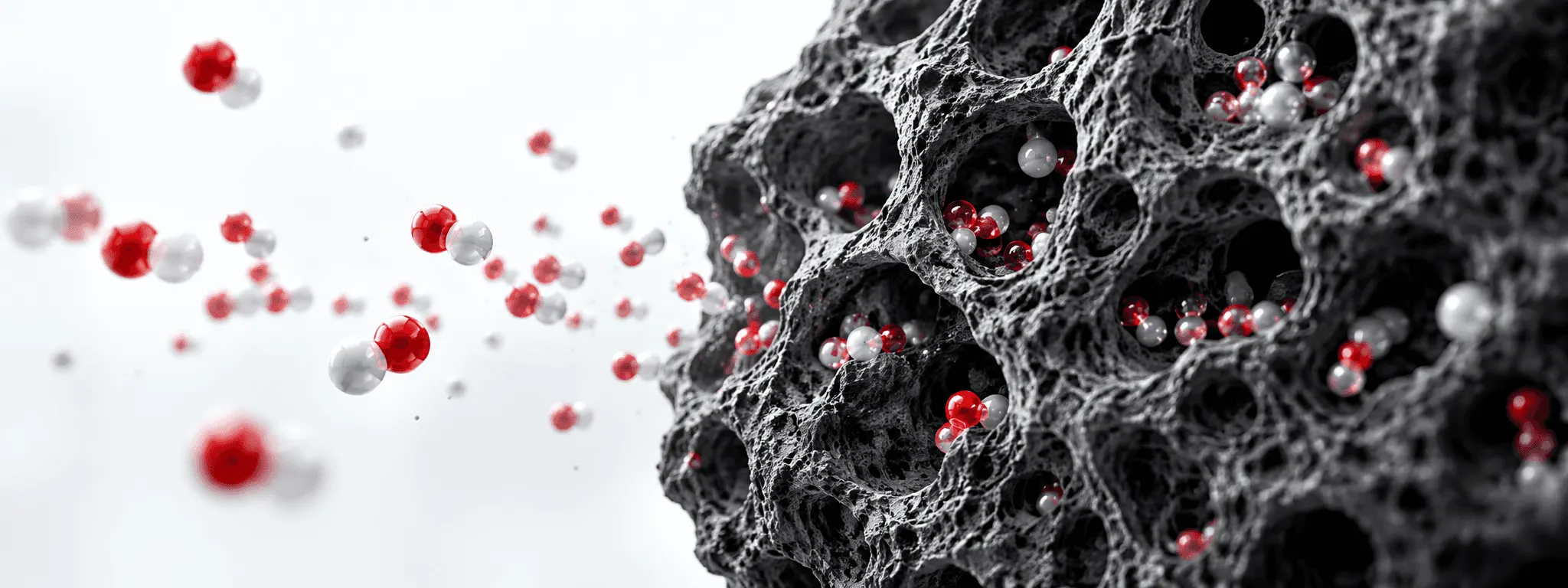
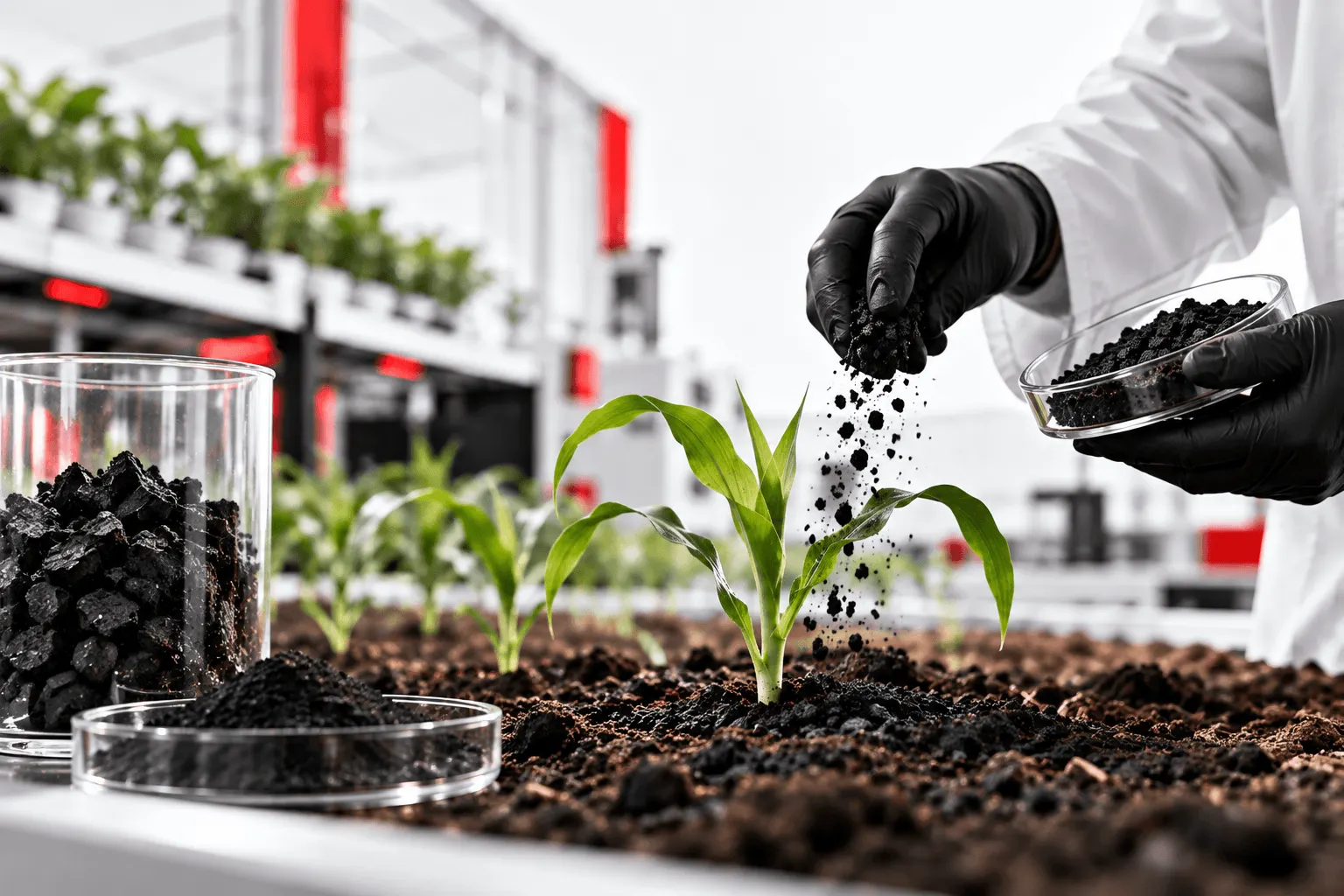
The porous structure of biochar holds nitrogen, phosphorus and potassium and releases them steadily through the growing season. Our aim is a soil input that feeds crops for longer and keeps more of each nutrient in the root zone.

We track nutrient release rate, cation exchange capacity and crop response in field trials.

var(--variable-meI8I3Mcr)

In development

Soil biology

Microbial and mineral biochar

Biochar pores make a sheltered habitat for beneficial bacteria and fungi, and mineral enrichment adds the micronutrients that many tropical soils need. Together they help restore the living part of the soil that drives fertility.

We track microbial survival, root colonisation and soil biological activity.

var(--variable-meI8I3Mcr)

In development

Water treatment

Engineered sorbents for water

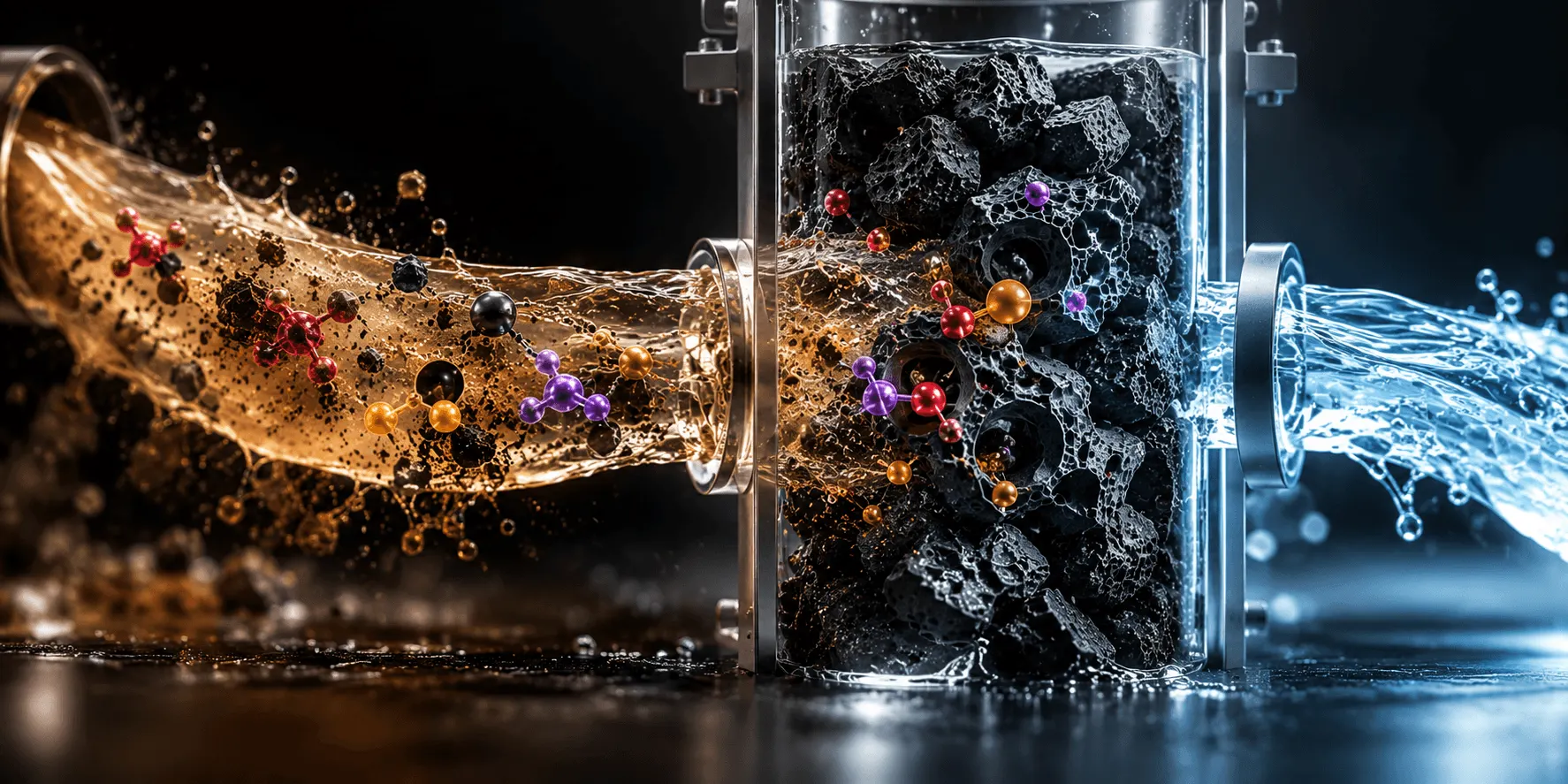
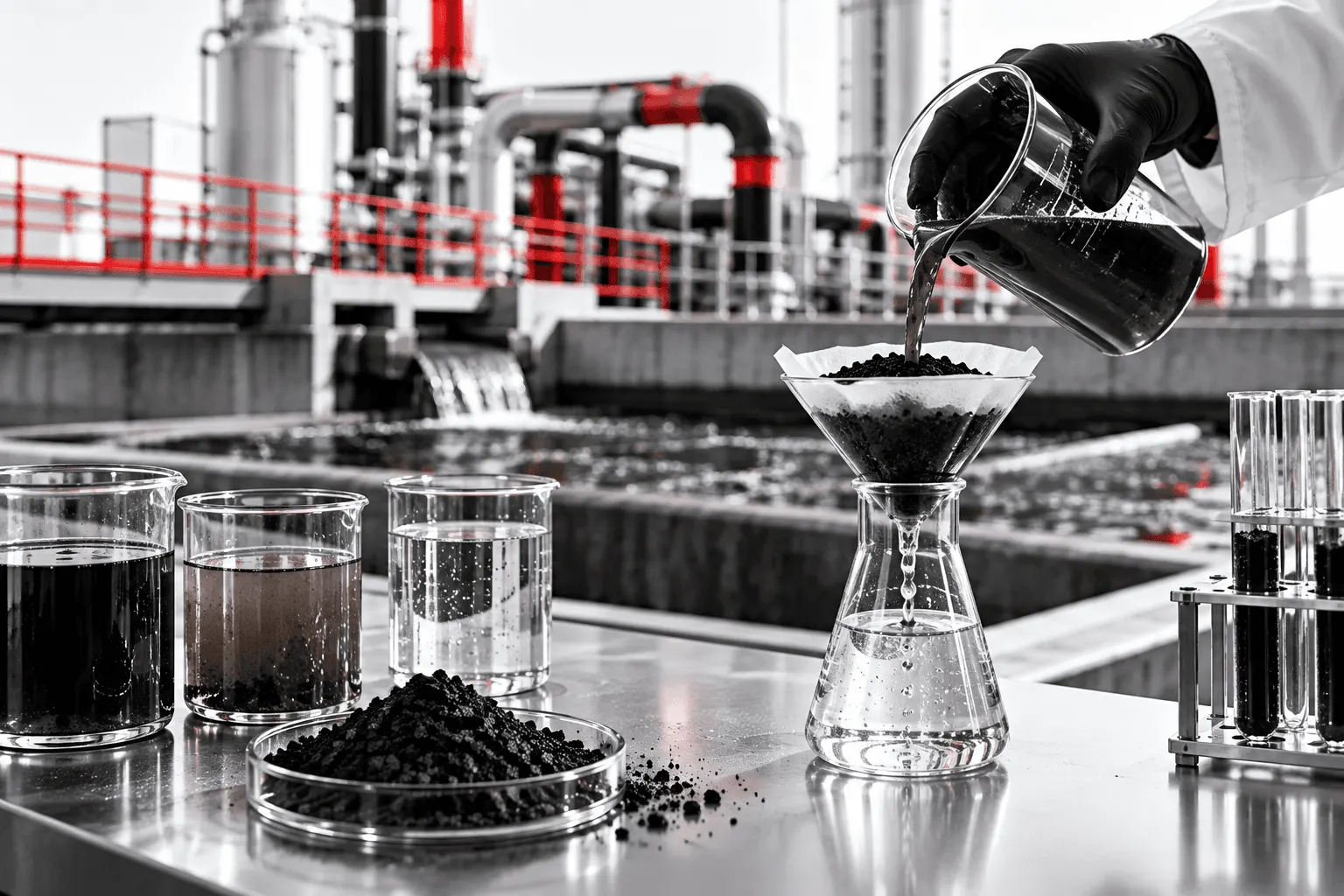
Surface treatment and controlled activation give biochar a strong affinity for heavy metals, dyes and excess nutrients. These sorbents are designed for rural drinking water and for effluent from the textile and tannery clusters of Tamil Nadu.

We track adsorption capacity, selectivity and performance over repeated regeneration cycles.

03 / RESEARCH PATHWAY

Every material follows the same path from feedstock to pilot.

A clear pathway keeps our research rigorous and repeatable. Each stage ends with measured results, and a material advances to the next stage when those results meet the targets we have set for its application.

01 / 06

Feedstock selection

We choose biomass for composition, consistency and availability, because plant structure shapes the carbon it becomes.

Explore each stage
Feedstock selection

CIRCULAR CARBON / KARI ENERGY

Feedstock selection

We characterise each candidate with established laboratory methods.

Characterisation turns a promising sample into a material we understand. These measurements tell us why a carbon performs the way it does, which lets us reproduce good results and improve on them batch after batch.

var(--variable-meI8I3Mcr)

measures specific surface area and the distribution of pore sizes from micropores to mesopores.

var(--variable-meI8I3Mcr)

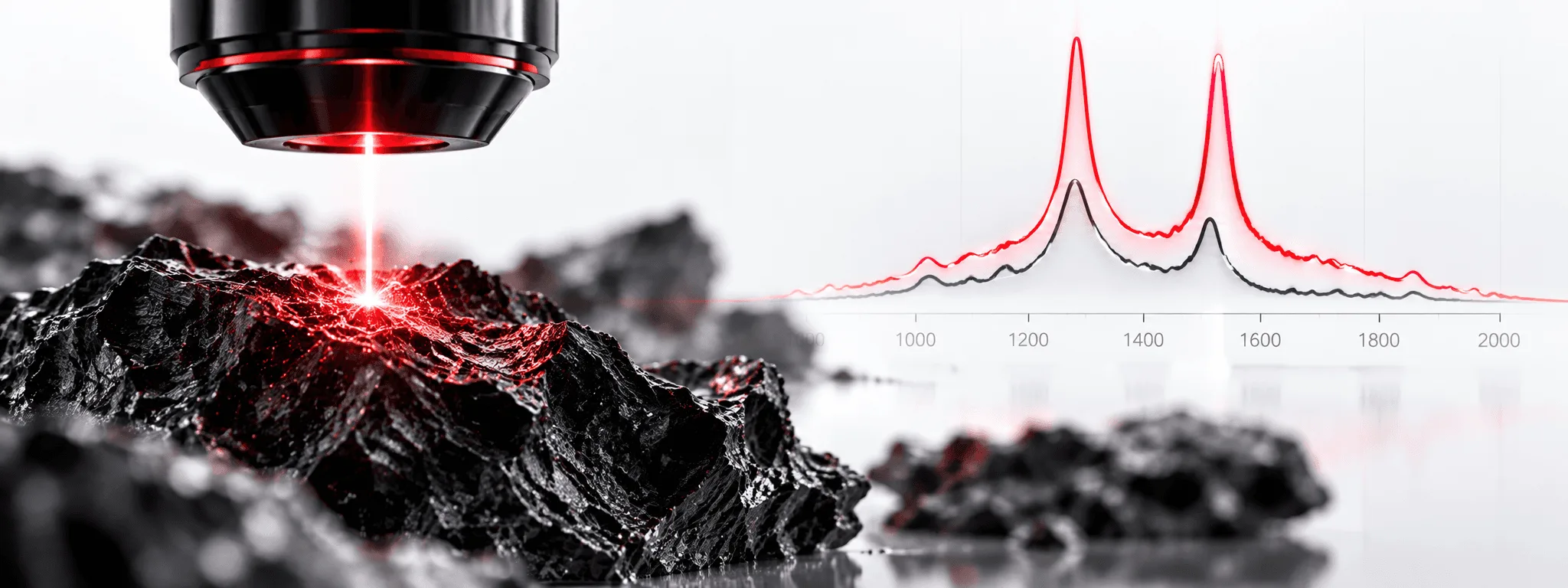
reads the balance between disordered and graphitic carbon, which signals how ordered and conductive the structure has become.

var(--variable-meI8I3Mcr)

reveals the spacing between carbon layers, a key factor in how much sodium a hard carbon can store.

var(--variable-meI8I3Mcr)

shows the shape of particles and pores directly, so the structure we designed can be seen and confirmed.

var(--variable-meI8I3Mcr)

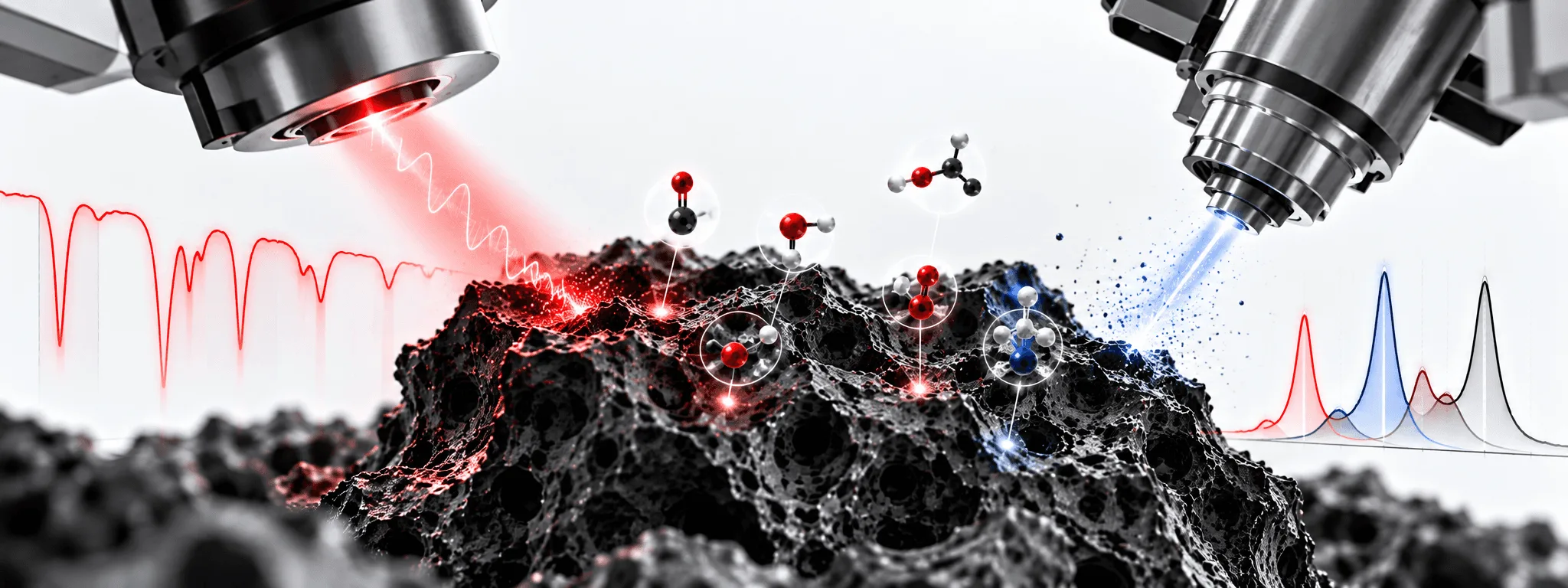
gives the carbon, hydrogen, nitrogen and oxygen content, including the H/C ratio that indicates long-term stability.

var(--variable-meI8I3Mcr)

identify the functional groups on the carbon surface that hold nutrients, bind contaminants or anchor catalysts.

var(--variable-meI8I3Mcr)

cycles each energy material in test cells to measure its capacity, efficiency, power and lifetime.

Climate value

The same tonne of carbon achieves more as our research refines it.

Biomass carbon can supply clean heat, stay in soil as durable storage, take on a function in fields and water, or become part of an advanced energy material. Each step adds value and broadens the climate benefit. Our research moves a growing share of every tonne towards the upper steps.

Biomass carbon can supply clean heat, stay in soil as durable storage, take on a function in fields and water, or become part of an advanced energy material. Each step adds value and broadens the climate benefit. Our research moves a growing share of every tonne towards the upper steps.

01Energy

This benefit is reported as avoided emissions.

02Storage

Stored carbon is issued as verified removal credits when a project meets Puro.earth or Isometric requirements.

03Function

The stored carbon is credited as removal, and the soil and water benefits are measured and reported alongside it.

04Materials

Life-cycle benefits are assessed product by product and reported separately from removal credits.

Verified removal credits are issued for carbon placed in durable storage and quantified under the applicable methodology. Every other benefit is reported separately, so that each one is counted once.

Collaborate

We develop our best materials alongside our partners.

We work with companies and institutions that need better carbon materials and want to develop them together. Partners can evaluate samples, co-design a material for a specific application, run joint trials or license processes as they mature.

We work with companies and institutions that need better carbon materials and want to develop them together. Partners can evaluate samples, co-design a material for a specific application, run joint trials or license processes as they mature.

Energy storage

Battery and capacitor developers

Battery and capacitor developers

Battery and capacitor developers

Evaluate our hard carbon and porous carbon samples in your own cells and help us tune them to your design.

Evaluate our hard carbon and porous carbon samples in your own cells and help us tune them to your design.

Agriculture

Fertiliser and agri-input companies

Fertiliser and agri-input companies

Fertiliser and agri-input companies

Co-develop nutrient-loaded and microbial biochars and test them across the crops and soils your farmers work with.

Co-develop nutrient-loaded and microbial biochars and test them across the crops and soils your farmers work with.

Water and industry

Treatment and industrial firms

Treatment and industrial firms

Treatment and industrial firms

Trial engineered sorbents on your effluent streams and shape a material around the contaminants you need to remove.

Trial engineered sorbents on your effluent streams and shape a material around the contaminants you need to remove.

Research

Universities and laboratories

Universities and laboratories

Universities and laboratories

Join our work on characterisation, field trials and publication, building on the soil and crop science of Tamil Nadu Agricultural University.

Join our work on characterisation, field trials and publication, building on the soil and crop science of Tamil Nadu Agricultural University.